Native Stingless Bee Honey vs. Regular Honey — A Science-Based Comparison
Brazil has one of the world's greatest diversities of native stingless bees (Meliponini). A recent taxonomic review recognized 259 valid species in Brazil, in addition to species that are still being described. These bees participate in the pollination of native and cultivated plants and are an important component of Brazilian biodiversity.
The honey produced by stingless bees differs from honey produced by Apis mellifera in several physicochemical characteristics. Scientific studies commonly report differences in moisture, acidity, sugars, phenolic compounds, antioxidant activity, flavor and storage behavior. However, these characteristics vary considerably according to bee species, botanical origin, geography, season and processing.
Western Honey Bee — Apis mellifera


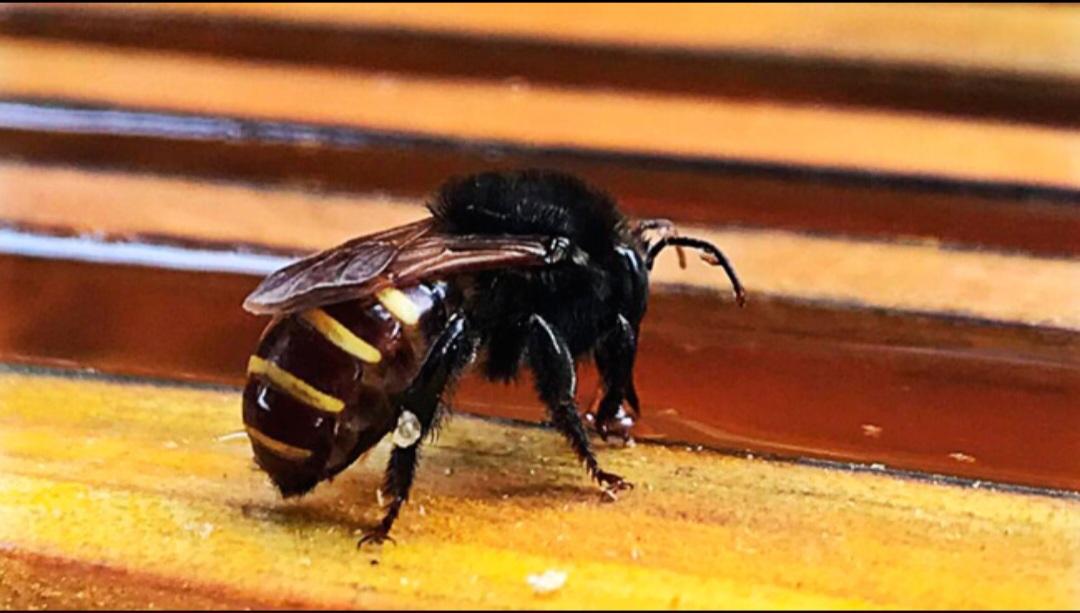
Native Brazilian Stingless Bee — Mandaçaia (Melipona quadrifasciata)


Native stingless bee Mandaçaia (Melipona quadrifasciata), a Brazilian species of the Meliponini tribe, recognized by its characteristic body pattern. Photo reference: mel.com.br
Mandaçaia (Melipona quadrifasciata) observed in a wooden hive structure. Photo reference: mandacaiasocial.com.br
Apis mellifera on a flower. Reference: Wikipedia — Western honey bee
Apis mellifera gathering nectar from flowers. Reference: Wikipedia — Apis mellifera
| Scientific parameter | Apis mellifera honey | Stingless bee honey Meliponini |
|---|---|---|
| Bee origin in Brazil | Apis mellifera is not native to Brazil. It was introduced and Brazilian populations are now predominantly derived from Africanized honey bees. | Meliponini include a highly diverse group of bees native to Brazil and other tropical and subtropical regions. |
| Production characteristics | Well established for commercial and large-scale honey production. | Generally produced in smaller quantities, with production strongly dependent on bee species and colony size. |
| Moisture | Generally lower. | Generally higher. Reviews and comparative studies consistently identify moisture as one of the major physicochemical differences between the two honey groups. |
| Acidity | Acidic, with values depending on floral and geographical origin. | Typically higher free acidity and frequently lower pH, although values vary substantially among species and origins. |
| Sugar profile | Fructose and glucose are the predominant sugars. | Sugar composition varies by species and floral source. Reviews generally report lower total sugar concentration compared with Apis mellifera honey. |
| Enzyme activity | Enzymatic parameters such as diastase are commonly used in conventional honey quality assessment. | Enzyme activity varies widely. Scientific reviews have reported that some conventional honey parameters, including diastase activity, may be lower in stingless bee honey. |
| Phenolic compounds | Contains phenolic compounds and other antioxidant components, with large variation according to botanical origin. | Comparative research and meta-analysis indicate higher phenolic content on average in stingless bee honey, although individual samples vary substantially. |
| Antioxidant activity | Antioxidant activity varies according to floral source, geography and composition. | Often high. Meta-analysis has found greater antioxidant activity on average in stingless bee honey, but this is not universal to every sample. |
| Antimicrobial activity | Antimicrobial activity is documented in many honey types. | Laboratory studies have reported antimicrobial activity against several microorganisms. The magnitude depends strongly on species, botanical origin, concentration and experimental method. |
| Storage behavior | Lower moisture generally provides greater stability when properly processed and stored. | Higher moisture increases susceptibility to fermentation. Appropriate harvesting, processing and storage conditions are therefore particularly important. |
| Sensory profile | Highly variable according to botanical and geographic origin. | Frequently more fluid and acidic, with distinctive floral, fruity, citrus or fermented notes depending on species and origin. |
| Ecological role | Important pollinator of numerous agricultural crops and other flowering plants. | Native stingless bees are important pollinators of native vegetation and several cultivated plants, contributing to biodiversity and ecosystem functioning. |
Scientific note: stingless bee honey is not a single standardized product. Composition can vary substantially according to bee species, floral resources, geographic origin, season, climate, harvesting, processing and storage. Numerical values from an individual study should therefore not be generalized to all Meliponini honeys.
What scientific research indicates
- Stingless bee honey generally has higher moisture and free acidity than Apis mellifera honey.
- A recent systematic review and meta-analysis found higher phenolic content and greater antioxidant activity on average in stingless bee honey.
- Laboratory studies have identified antioxidant, antimicrobial and anti-inflammatory activity in different stingless bee honeys.
- These biological activities depend strongly on bee species, floral origin, geography and processing.
- Research into possible health applications is ongoing. Evidence from laboratory and animal studies should not be interpreted as proof of therapeutic effectiveness in humans.
Scientific references
- Ávila, S., Beux, M. R., Ribani, R. H. & Zambiazi, R. C. (2018). Stingless bee honey: Quality parameters, bioactive compounds, health-promotion properties and modification detection strategies. Trends in Food Science & Technology, 81, 37–50. DOI
- Biluca, F. C., Braghini, F., Gonzaga, L. V., Costa, A. C. O. & Fett, R. (2016). Physicochemical profiles, minerals and bioactive compounds of stingless bee honey (Meliponinae). Journal of Food Composition and Analysis, 50, 61–69. DOI
- Biluca, F. C. et al. (2017). Phenolic compounds, antioxidant capacity and bioaccessibility of minerals of stingless bee honey (Meliponinae). Journal of Food Composition and Analysis, 63, 89–97. DOI
- Biluca, F. C. et al. (2020). Investigation of phenolic compounds, antioxidant and anti-inflammatory activities in stingless bee honey (Meliponinae). Food Research International, 129, 108756. DOI
- Pimentel, T. C. et al. (2022). Stingless bee honey: An overview of health benefits and main market challenges. Journal of Food Biochemistry, 46(3), e13883. DOI
- Vit, P.; Pedro, S. R. M.; Roubik, D. W. (eds.) (2013). Pot-Honey: A Legacy of Stingless Bees. Springer. DOI
- Nogueira, D. S. (2023). Overview of Stingless Bees in Brazil (Hymenoptera: Apidae: Meliponini). EntomoBrasilis, 16, e1041. DOI
- EMBRAPA — Brazilian Agricultural Research Corporation
- Federal University of Paraná — UFPR
- University of São Paulo — USP
More than a distinctive food, native stingless bee honey represents a direct connection between pollinators, native vegetation, biodiversity and people.
Ilha do Mel Nativo — Brazilian Native Stingless Bee Honey · Rare. Native. Rooted in the Atlantic Forest.
Comentários